Oh, sit down…

Yesterday was one of those ugh days. I had a couple of medical appointments and a few errands to run. I was tired and sore, but it was a sunny day, so off I set.

My mood took the first knock when my taxi driver has a rant about how short my journey was. Granted I wasn’t going far, but I can’t get about on foot. If I want to go somewhere, I need a taxi. Next up was a rude & unhelpful woman in the chemist. She made it very clear that finding my prescription was an inconvenience. Much huffing, puffing and snarky comments ensued, which drew stares from other customers. The final nail in the coffin of my day was the hospital receptionist who would not source a chair for me, but also got angry when I sat on the floor. Sitting on the floor is hazard, but passing out because I cannot stand apparently is not.

Rubbish day, but not the end of the world, right? If these were isolated incidents I would probably just brush them off. The problem is, it happens all the time. Being a disabled person out in the world can be a challenge. Accessibility is a problem, but even requests for basic accommodations can be met with irritation. On some level, I understand that. Work can be exhausting, maybe you’re having a bad day and being asked for something extra could just tip you over. However, most of my life is exhausting. I don’t make these requests to be awkward, I need them.

The result is I get apologetic. I begin my request with ‘I’m sorry, but’ or ‘I don’t want to be pest, but’. I feel like an inconvenience for asking. I anticipate that my accessibility request may not be well received. Listen, inside I often feel like getting arsey. My natural demeanour is not push over. I just know it won’t help. I also rarely have the energy for the fight. Thus, I find myself simultaneously pissed off at being made to feel bothersome & apologising for the perceived trouble.
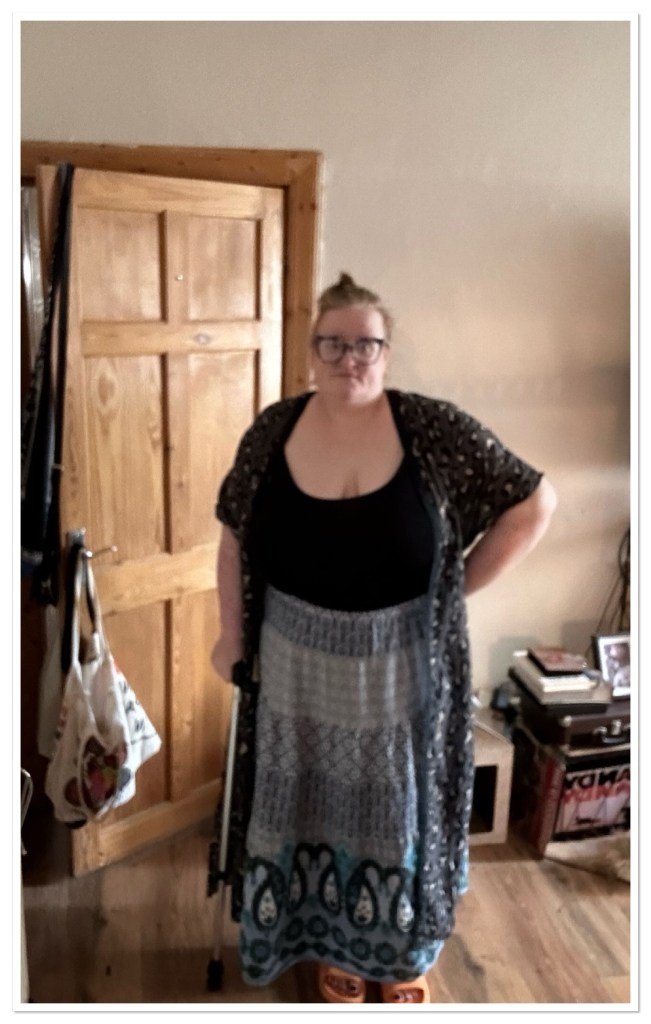
I don’t need any help on the guilt front. I already feel like a burden to people that matter. Is it too much to ask that strangers don’t make me feel like shit? My needs are very straightforward; a seat mainly. I dread to think how anyone with a more complex requirement fares. All I’d ask is that before you roll your eyes or have a moan consider that this a moment of inconvenience for you is a lifetime of fuckery for us. Maybe you could just zip your lips and grab a chair after all?

If you like what I do you can support me here or on Patreon .

We go together…

I received an early Xmas present today. If I get a present early, I open it because delayed gratification is not my jam. However, I had permission to get into this one. In any case, I am utterly in love with it & the person who gave it.

That affection got me thinking about something I saw discussed on Twitter. The old ‘internet friends aren’t real friends’ debate. Obviously I don’t agree. This thoughtful, beautiful gift from a dear friend who I originally met online drove me to elaborate on that. I definitely think it is possible to be catfished (deliberately or not) into friendship online. You can ‘meet’ people with whom you have one thing in common & so can maintain an online relationship with, but it likely wouldn’t sustain an actual in person friendship. You can find people who purposely deceive or folk who are just able to portray a persona online that they can’t quite manage in life. Of course there are dodgy folk, lonely folk & even dangerous people who can use the internet to their advantage (& your disadvantage). I accept that’s all true. However, the flip side is all the wonderful people you might not ever have the chance to meet. This is were I come in.

Due to mental illness, chronic illness and working from home I have been perhaps more online than most folk. Or at least I’ve been more online for longer than a lot of people. As a result of that I have made genuinely good friends via the internet. I found understanding & acceptance from strangers on my computer when no one in real life really got my self harm. I’ve connected with a fat community that I would never have had access to outside of the web. Both of those groups changed my life. Networking with other freelancers has led to friendships along with work opportunities. I have been able to work with editors, organisations and publications via social media connections that have progressed my career. Beyond that I have met & built real relationships with people I have met through appreciating their art, respecting their activism or just firing them amusing online.

Those connection points have grown into really meaningful friendships. People I have gone on to meet and cherish. I have friends I consider an integral part of my life who started out as anonymous screen names. I think social media and the internet in general can generate valuable relationships. I also believe that the notion that those friendships aren’t real is inherently ableist and othering. Disabled and chronically ill people often rely on the internet for many things that others can access by leaving their home. In addition people who for whatever reason find themselves outside the norm can find like minded communities much easier online. The ability to do that is crucial.

All of which brings me back to that gift. My super talented friend Sarah created this wonderful digital portrait. It’s taken from my sister’s wedding and I feel so lucky to have it. I would never have met Sarah in real life. She lived far far away when we met (& even further now). Nevertheless, we have a shared history and understand of each other that is very special. So, thank you internet for bringing this woman into my life. And, thank you Sarah for this gift.

Digital portrait of Ly wearing green swing dress. Standing with her hands on her hips

If you enjoy my writing you can support me on Ko-Fi

Don’t worry, my arse…

I worry. Quite a lot actually. I stress over things great, small & possibly non existent. I probably worry much more than is either necessary or prudent. That’s the nature of worrying, though.

So, I while I confess to sometimes wishing I could turn off the worrying I find it incredibly frustrating when people suggest that is possible. There are of course strategies to deal with disquieting situations, merely deciding not to worry about it is not one of them.

I keep seeing this sort of thing offered as some kind of wisdom. This isn’t wise, it isn’t even sensible. It just displays an inability to understand what worry is. If it were possible for a person to decide no to worry, worry wouldn’t be a thing.

Obviously this is abelist. Anxiety is not always rational. Many people struggling with mental illness have spiralling worries. Ranging from the practical (money, employment, relationships) to the irrational & far reaching concerns that mental illness can bring. When you tell someone they can choose to stop, you’re kind of saying their anguish is their own fault. Advising a person to just stop worrying is as pointless as telling them to just not be ill.

Setting aside the ableism it’s still infuriatingly useless advice. Let me break it down,

Do you have a problem?

If I didn’t consider the issue a problem, I wouldn’t be concerned about it. So, yes, regardless of what an outsider might think, I clearly think it’s a problem.

Can you do something about it?

If I can, the solution must still be troubling or uncertain otherwise I wouldn’t be worrying.

If there is nothing I can do ignoring or pretending the issue doesn’t exist will not help me. Plus, lets me face it, if you are facing a problem that you cannot solve it’s unlikely that you can just magically forget it.

Saying this to someone in distress is unkind. It basically translates to I don’t care. Telling someone not to worry is not a suggestion of self care. It’s dismissive. Instead, perhaps try listening. Sometimes just saying it out loud can be helpful. If you can offer practical help, do. If you don’t know what someone needs, ask. A simple ‘what can I do’ can be so valuable. A little bit of time goes a long way.