Is it cos I’m cool…

If you believe the right wing press, being disabled or chronically ill is the latest trend. About a month ago Kathleen Stock (notable anti trans activist) wrote a piece for The Times titled ‘Why are so many young women using walking sticks?’. Her complaints about the use of mobility aids clearly chimed with Poppy Coburn, who, this month penned ‘How having a disability became cool’ in The Telegraph. Both pieces rely on the same prejudice and ignorance. Ultimately, they also support the same agenda.
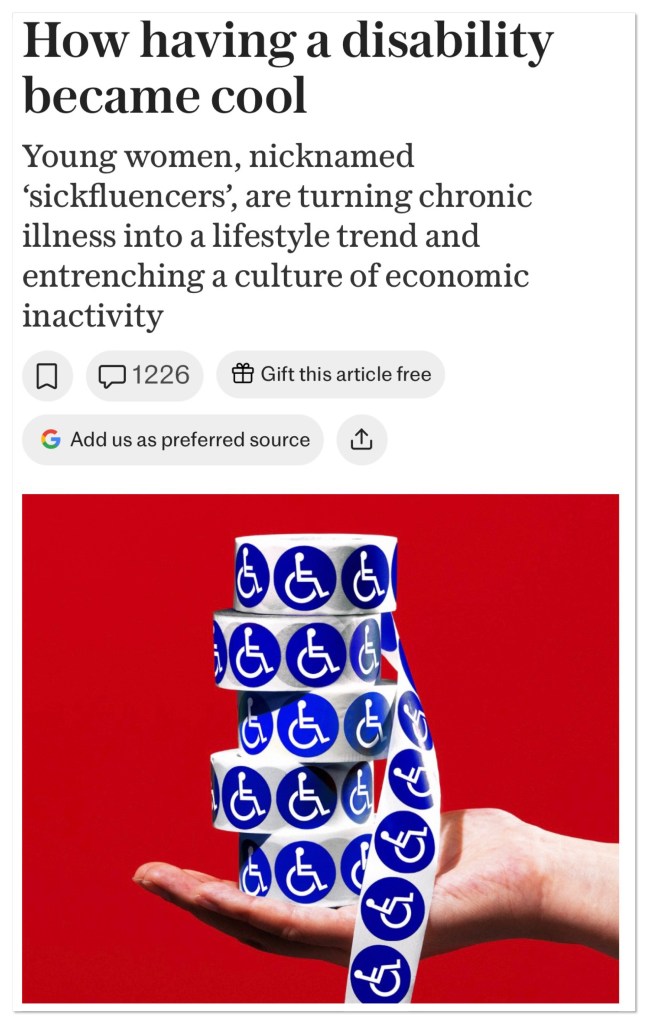
Stock & Coburn both proclaim there to be more disabled people than ever before. They specify that these disabilities are mostly amorphous and hard to prove. Coburn in particular takes aim at PoTS. Both writers conveniently ignore that we have all lived through a global pandemic, which experts have long warned would be a mass disabling event. With this in mind, PoTS is particularly relevant. Covid has resulted in a huge increase in PoTS diagnoses. PoTS is one the acknowledged conditions that Covid19 can induce. I myself, was left with PoTS after contracting Covid. I was intially diagnosed with Long Covid, but Drs quickly noticed that my symptoms mirrored those of PoTS. Far from Coburn’s claim that Pots is hard to quantify and diagnose, there are actually very clear markers and tests. Tachycardia , Dizziness & Syncope, Breathlessness and Air Hunger. There are of course many more symptoms, but these are usually the red flags for PoTS. All of which can and are quantified and recorded with standard medical tests. Media like this supports the notion that chronic illnesses are so indistinct as to be easily faked. This is of course nonsense. Equating many people struggling to get a diagnosis with a condition being difficult to diagnose is absolute bullshit. This narrative increases stigma and ultimately makes accessing appropriate support harder. Which is of course, kind of the point.
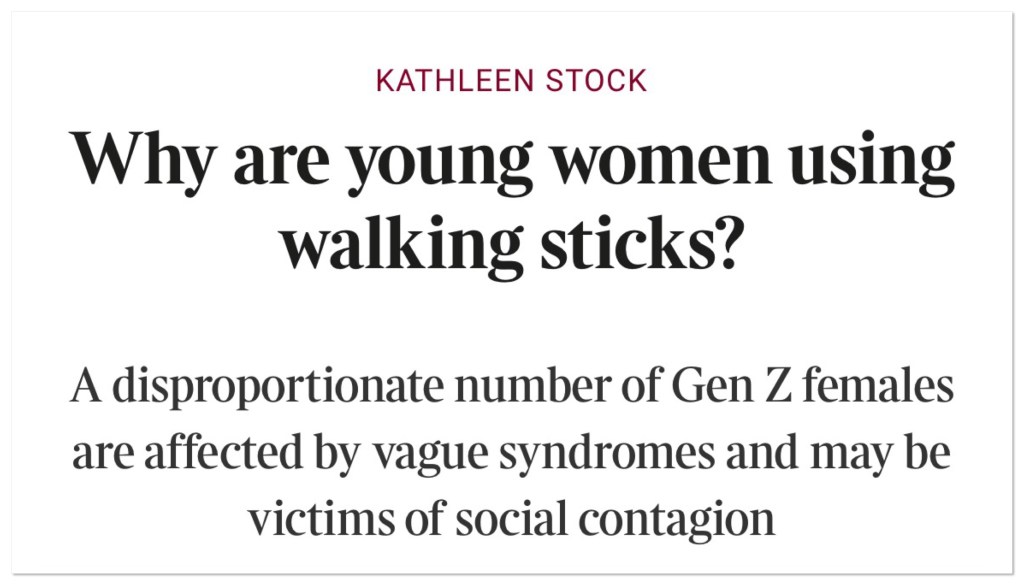
The cool factor, they insist, is intrinsic to the rise in chronic illness. Coburn posits that chronic illness & disability are in fact a lifestyle. The appeal of which is fame, fortune and the easy life. Conditions like PoTS, EDS, MCAS & Fibromyalgia are, she says, used as an excuse to avoid adult responsibilities. Thus unencumbered the sick & disabled are free to pursue their chosen lifestyle. Longterm sickness is absolutely a choice to Coburn & her ilk. By her telling, there are no years of debilitating symptoms, no ever increasing medical visits, no fighting for diagnosis nor any battle for relief. Nope; one simply decides that they are chronically ill. Perhaps this is accompanied by sharing one’s experience on social media and voila, a new identity is born. Of course, everyone who has a chronic illness or disability is automatically granted vast amounts of disability benefits. Those Instagram posts always turn into large follower counts and lucrative brand deals. People share their experiences not for catharsis or in an attempt to help others. Their true motivation is profit and clout. Both of which are abundantly available. Disability is of course, very glamorous and society is famously eager to endlessly accommodate. Sickness becomes an entire identity. A victim mentality is encouraged, nay, embraced by the communities that have emerged. Thus, people seek to display their disability with customised mobility aids to up their cache. It is not unnoticed that Coburn and Stock critically align the disabled community with other marginalised groups. Just the latest ridiculous fad among the loony lefties. Life as ‘sickfluencer’ is all health updates on social media, sparkly mobility aids and raking in the PIP.
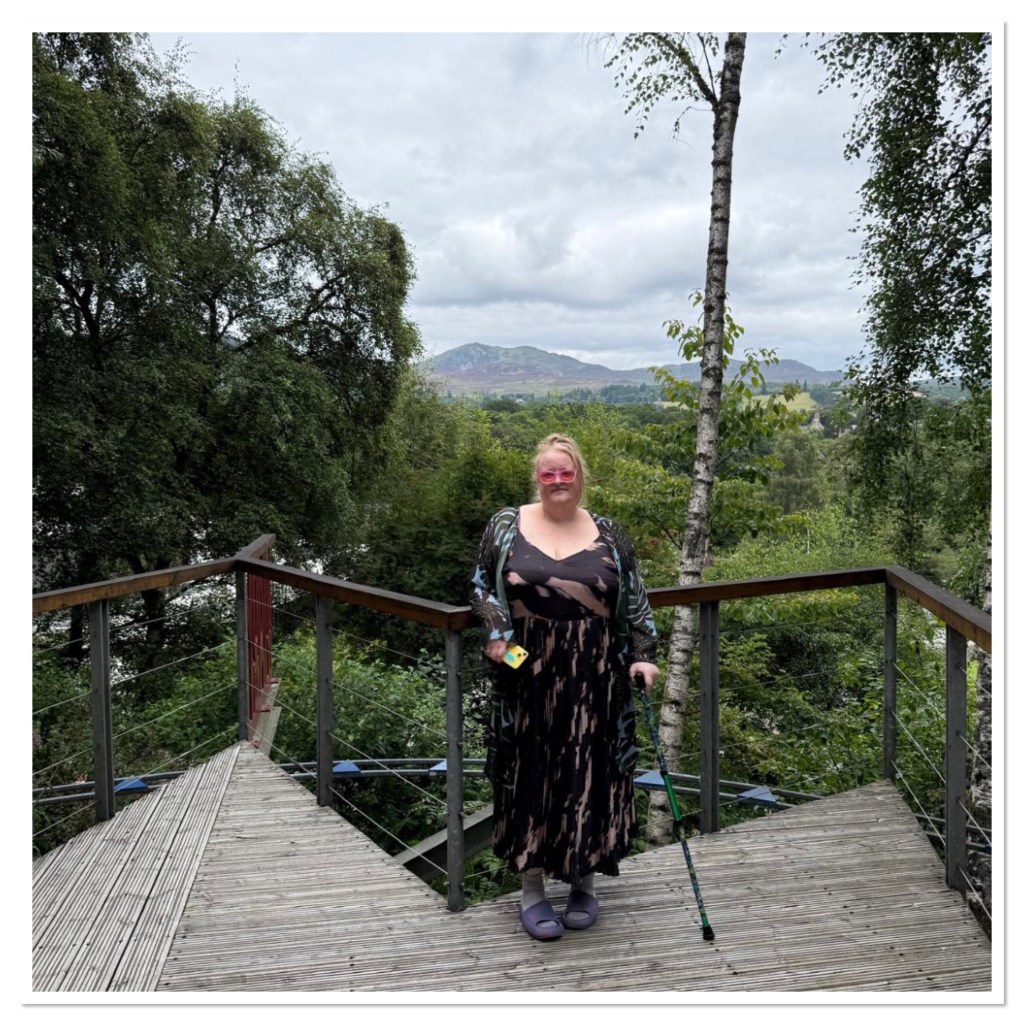
The reality of chronic illness is a far cry from Poppy’s ‘cool kids club’. Both writers focus on young women, the inference being that this a group that is not to be trusted. The misogyny echoes the bias women often face when seeking medical help. Women routinely receive subpar medical treatment. We are less likely to have our symptoms believed or investigated. Diagnosis takes far longer for women, than men. Conditions that mainly or solely affect AFAB people are not well researched. Even our access to pain relief is severely limited. Medical misogyny has been well established. The activism of women has been a pivotal factor in changing this. These articles ignore the battle that has been fought for the recognition of these conditions. There has been a rise in diagnosis of ‘invisible’ illness. This is not because people are faking, but due to wider recognition of those conditions. These conditions – and the suffering they cause – have always existed. The only difference is they are now officially accepted.
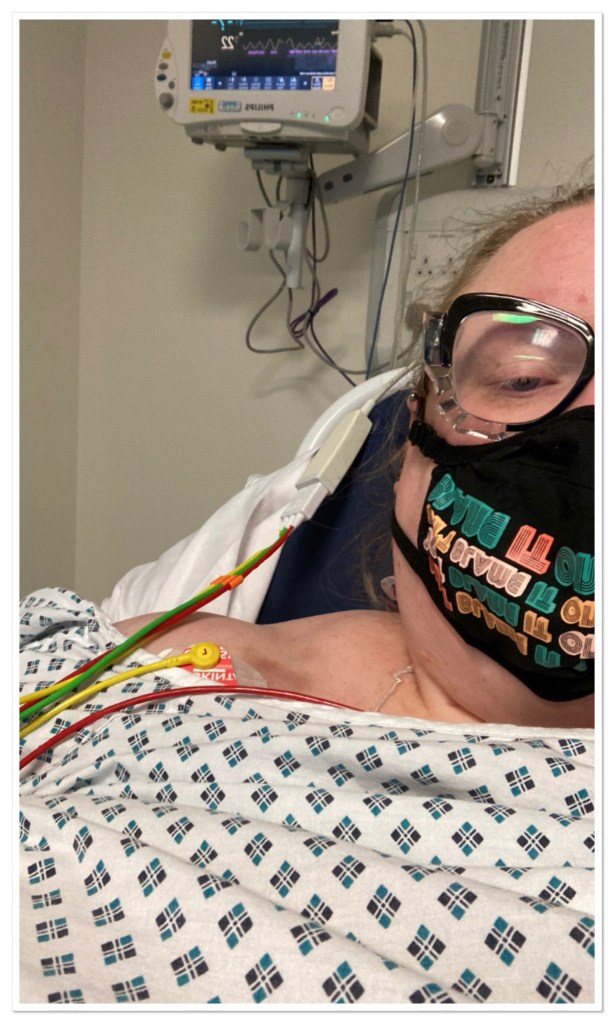
Diagnosis obtained, the next step is not, as suggested, to collect disability limits and live a life leisure. To begin with, the main disability payment PIP (Adp in Scotland) is not an out of work benefit. It designed to cover the extra costs that occur due to being chronically ill and or disabled. Many people in receipt of these benefits are working. Those who do not are unable to. Claiming disability benefit is not easy. Infact, the system is designed to discourage applicants. The intial paperwork is exhaustive. Each condition, treatment, medication and medical professional seen must be detailed. Furthermore, each symptom and how they impact daily life must thoroughly described. Medical evidence is required for every claim. This process is followed by DWP assesment. These are carried out by ‘medically trained’ assesors, but that medical training is rarely relevant to the claimants being assessed. Assessments consist of being questioned about every aspect of life, often being forced to disclose the most private and distressing details to a stranger. That assessor will then decide if/what you are awarded. Unfortunately these assessors rarely accurately represent what occurred in their reports. There have been countless examples of proven lies and cases of severely ill people being denied. From there one must undertaken a stressful appeal process that often seriously impacts the claimants health. The fact the majority of people who appeal will succeed underlines the fact this system is not fit for purpose. Having been through the process, I do not believe it is possible to be falsely awarded disability benefits. The DWP’s own research put fraudulent claims at less than 1%. The people who are awarded these benefits are significantly disabled by their conditions. The hate mongering that these pieces indulge in serves only to goad the public into accepting the withdrawal of support to some of the most vulnerable members of our society.

The truth of chronic illness is much bleaker than Coburn or Stock would have you believe. There’s no choice about the constant pain, fatigue, nausea or passing out. There symptoms cannot be switched off. There’s no magic wand to improve one’s mobility or rework our genetics. It’s a continuous battle to function in a world that refuses to accommodate us. We’re not chilling at home eating lollipops. We’re stuck there, physically unable to take part in our lives. Sharing these stories online isn’t a popularity contest and I can tell you from personal experience, the odd PR product does not a rich girl make. I was actually gifted some of those ‘designer’ compression socks that Coburn mocked (value Aprox £25). They’re just compression socks that aren’t ugly. I need compression socks and if I can offer a genuine review to others I will. Being disabled doesn’t stop people having style or a personality. A pink walking stick is no different to pink glasses. No one accuses people of wearing funky glasses because poor eye sight is the latest trend. Content on this topic is usually about awareness and connection. These articles are evidence of the stigma that abounds. Information is the best tonic for ignorance. We disabled/chronically ill have to advocate for ourselves. We are forced to gather information and insist on second opinions or we suffer in silence. Debunking misinformation is essential to prevent our rights being further eroded. There is also solace to be found in shared understanding. Being too sick to partake in a social life can be very isolating. Even being the person that cancels has an impact on relationships. Finding others who understand your experience is powerful. If a very few people can parle that into a career why should that be problem? Aren’t hard work, entrepreneurship and self sufficiency hallmarks of the right?
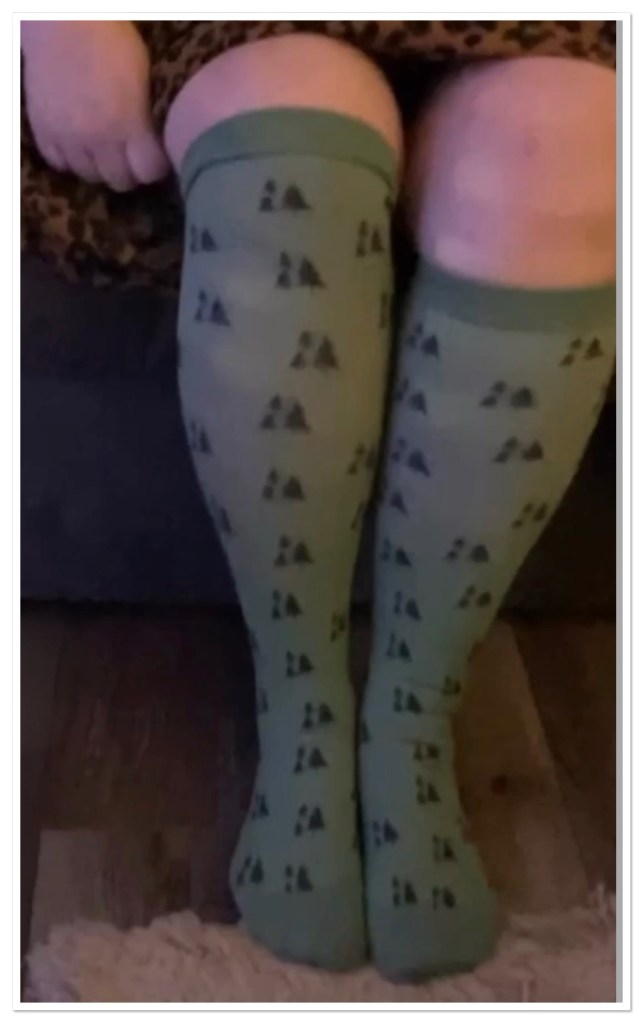
The offending socks.

It scares me it that these vile attacks now pass for mainstream journalism. These articles are clear propaganda. They are filled with untruths and snide judgements. The agenda of these pieces is blatant. Yes, they represent another skirmish in the culture wars, but they’re also a signal. A beaming light that directs hate. The disabled and chronically ill community are the latest target of the right’s misdirection. If the populace can be convinced that immigrants, trans and disabled people are the cause of all their woes, they won’t pay attention to the elite who are in charge. Like clockwork, a few days after The Telegraph piece we get details of Reform’s planned cuts to PIP. Politicians who choose to make deeper cuts to the welfare state, sell of you public services and rile up facist thugs are not your in your corner. Neither are the minions who spread their propaganda. Don’t be fooled by it.

You keep making me ill…

It gives me zero pleasure to say, but my concerns about the current government have proved to be correct. In the last few weeks I have watched aghast as Labour MPs have announced plans to gut disability benefits. Watching Wes Streeting boast about enacting Tory policies was a sickening confirmation of how far his party has fallen.

It is exhausting to repeatedly repudiate the narrative politicians spin about disabled people. However, it seems it is again necessary. I’d like to give you a simple run down on why Labour’s proposed cuts are wrong. Hopefully I can also dispel the lies they are telling to defend them.

Let’s start with what Personal Independence Payment (PIP) actually is. It is a benefit payable to those with a severe disability. It is not an out of work benefit. Nor is it means tested. The purpose of PIP is to mitigate the extra costs that come with disability and/or longterm illness. The latest stats show that the average extra cost for a disabled person is £975 p/m. Compare that to the maximum PIP payment of £737 p/m and it becomes clear that no one is living the high life via disability benefits. There are many people in receipt of PIP who do work. Those who don’t are unable to.

Labour plans are to freeze the payment (stop increases to keep up with inflation) and tighten the qualifying criteria. Their contention being that too many people receive PIP due it being too easy to qualify. They also push the idea that there are many people receiving benefit who do not need it. Labour is continuing where the Tories left off with targeting one of our most vulnerable populations. Welfare recipients and disabled people in particular are an easy target.

The assertion that it’s too easy to qualify for PIP is ridiculous. Let me be clear, no one without an official diagnosis is receiving disability benefits. Successfully applying for PIP is an incredibly onerous endeavour. The process requires extensive disclosures, evidence and the support of medical professionals. The system already purposely discriminates against those with mental illness. Alarmingly, Labour MPs are making a lot of noise about the rise in those out of work due to mental illness; giving a big hint as to who they may go after. Expert medical opinion is already ignored when it comes to work capability assessments. Our previous government destroyed lives with denials and unnecessary reassessments. Many of which were over turned by appeal. The problem for disabled people is the toll this process takes. Applying or appealing a decision is exhaustive and intrusive. The process strips applicants of dignity, applies incredible stress and often makes people sicker. The DWP routinely reject applications from people they know qualify. What Labour mean when they say they want to make us harder to qualify is that they knowingly want to deny essential help to people who absolutely need it. The DWP’s own findings assess the fraud rate for PIP at 0%. There is no evidence to suggest that anyone is taking advantage of disability benefits. Removing PIP will not encourage people back into work. Those who are unable to work will not be cured. Those awaiting treatment will not magically jump to the head of NHS queues. Those who would like to work, but cannot find an employer to meet their accommodation needs will be in the same position. The sick and disabled are not the cause of the UK’s financial problems. Nor is it within their power to alter their situation in life. Our government know this and still choose to make cuts to a life saving benefit.

What Labour have become under Keir Starmer is shameful. The PR campaign for their benefit cuts will further stigmatise a group merely trying to survive. Starmer & friends are too cowardly to tackle the rich with tax increases, closing tax loopholes and similar policies. Thus they turn the might of the government and sections of the media against the group least able to fight back. They do this fully aware of the consequences. Disabled people will die.

If you like what I do you can support me on Patreon.

Don’t Ask, Don’t Assume…

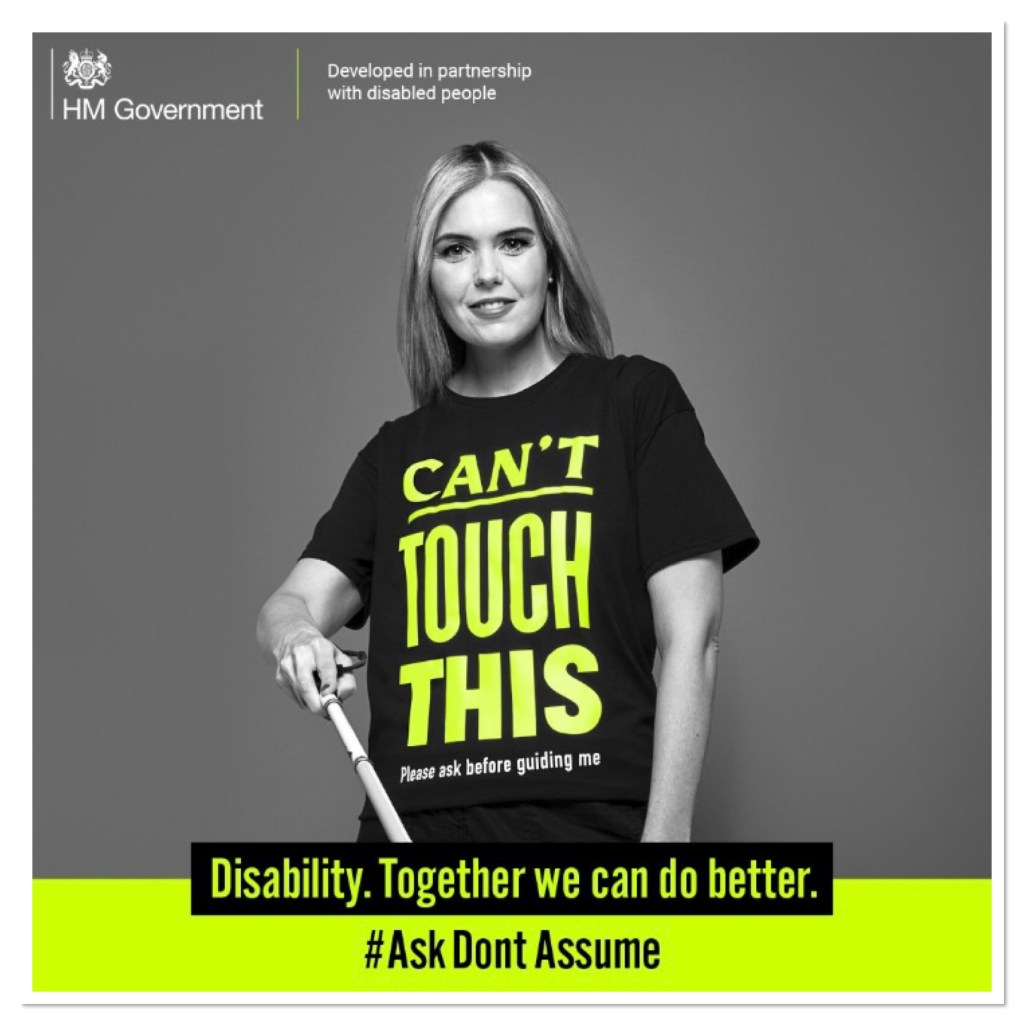
The government has launched yet another useless campaign. This time they claim the aim is empowering & dispelling myths about disabled people.

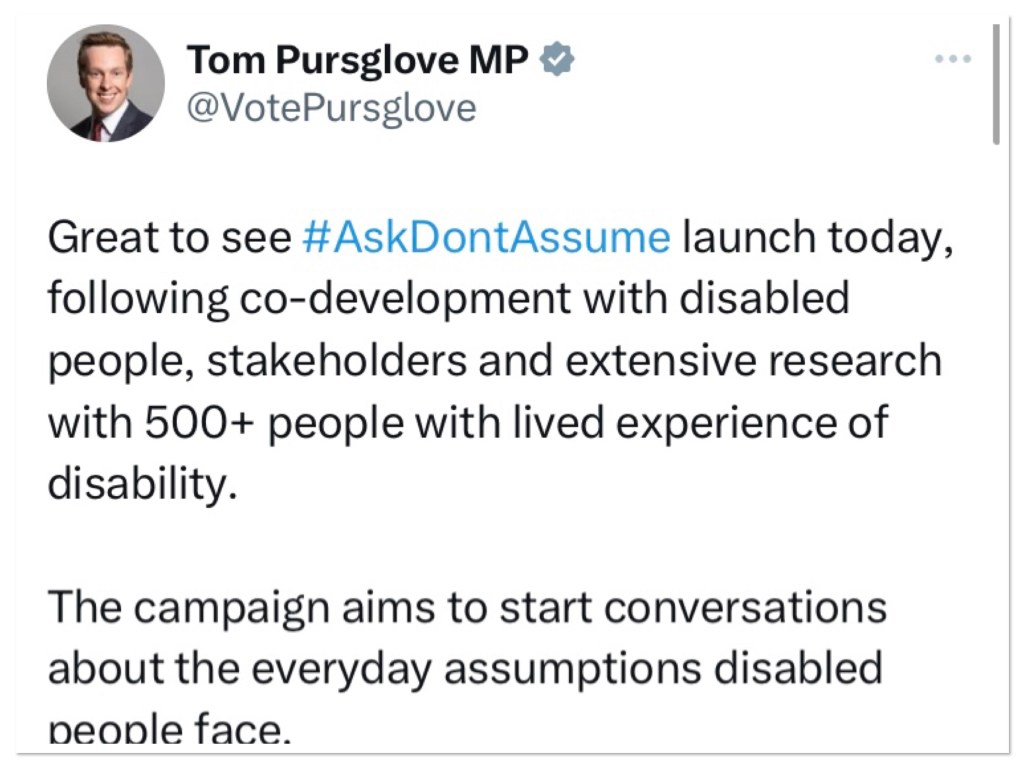
In my opinion Ask Don’t Assume is a big fail. I don’t seem to be alone in that opinion. Many disabled people agree that encouraging the public at large to ask us whatever questions into pop their heads is a terrible idea. The government claim to have done extensive research. According to Minister for Disabled People, Health & Work, Tom Pursglove that ‘extensive research was with 500+ people with lived experience of disability. To be honest I’m surprised they found 500 people who thought this was a good campaign. However, with 6.3 million people currently entitled to disability benefits*, consulting 500 does not qualify as extensive.

One of the problems I encounter as a disabled/chronically ill person is maintaining boundaries. So many strangers don’t think twice of asking personal & invasive questions. Almost every time I leave the house someone will ask ‘what’s wrong with you’. In recent years Tory policies regarding disability benefits have led to more people holding hostile views. Disabled people are often viewed with suspicion, which leads to strangers demanding information from me. People who know nothing about me or my circumstances feel entitled to my private medical information just incase I am somehow ‘scrounging’ benefits. A government campaign with the tagline, Ask Don’t Assume, legitimatises this behaviour.

Further, a lot of the campaign materials include toxic positivity/inspiration porn content. I watched a video with a woman describing her disability as a strength and as something that ‘can give back’. Everyone is of course able to decide what disability means to them, but none of this resonates with me. My disabilities make my life much harder. There are lots of thing I simply can not do. Even the most mundane of daily tasks are negatively impacted by my conditions. That doesn’t feel like a strength to me. I also cannot comprehend how a disability ‘gives back’. Do my defective knees perform acts of service? Or is my daily fainting somehow contributing to a greater good? If so, I haven’t seen the evidence or benefit.

I do not believe that this narrative is advantageous to the disabled community. Our value is not tied up in how well we overcome our disabilities. Disabled & sick people require accommodations. There will always be things we cannot do without assistance or at all. Our bodies do not function like the average person. There is no amount of determination or strength that can change that. The onus should not be on us to make abled bodied people feel comfortable with that. Disabled people should not have to be grateful, inspirational or make themselves ill trying to prove their worth.

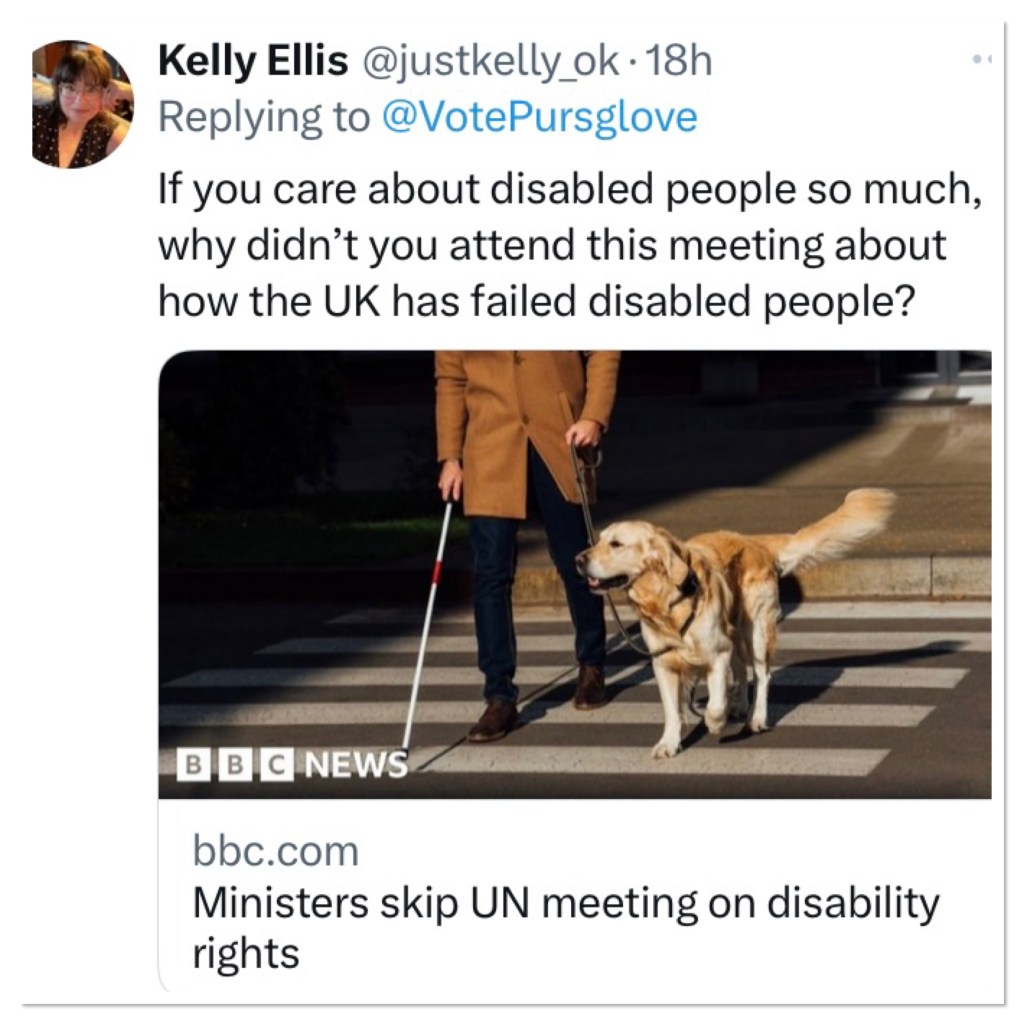
There have also been calls for our government to address their obvious failings with regards to disability rights. The Tories have spent over a decade attacking disabled people. Their continued battle to deprive people of vital benefits has done untold harm. Purposely making it incredibly difficult for those with mental illness to qualify for support is intolerable. Their persistent refusal to acknowledge UN reports on the circumstances of disabled people in the UK. Along with long-standing inequalities such as disabled people being unable to live with a partner or marry without losing disability benefits. There are many urgent issues this government could address if they truly wanted to empower disabled people. This is very poorly executed lip service.

If someone wants to share about themselves, they will do so. If a person requires your assistance, they will request it. There are very few instances in which is imperative to know the details of someone’s disability. The exceptions, health & safety in the workplace, safely accessing facilities and so on can all be handled discretely & professionally. There is never a reason to intrude on a disabled person’s privacy. This campaign does the opposite of its stated objectives. Considering it is a Conservative initiative, no one is surprised.

* UK Disability Statistics Feb 2023.

If you like what I do you can support me here or on Patreon.

Ordinary pain…

I have shared some of my pain management techniques in the past. Recently I’ve been experimenting with some new methods and I thought I would share how I have been getting on.

First is a product I have mentioned before, but have only recently been able to properly try. Lidocaine Patches are hard to come by in the UK. They’re expensive and so can only be prescribed by the NHS for a very limited number of conditions. They’re mainly used inpatient and for short periods. I had been able to try them for an incredibly short period of time a few years ago. I found them helpful, but wasn’t able to get a longer term supply. The surge in my pain levels this year sent me into research overdrive. Time and again I read articles & personal accounts of how amazing lidocaine patches were for arthritis & fibromyalgia. I discussed it with my GP who agreed that they would be a good option for me, but she wasn’t permitted to prescribe them. After much searching I found a way to source the patches and bought them myself. They are not cheap. I had mine sent from Canada, 10 patches were approx £60. For me, they are proving worth it. The patches offer excellent relief for my joints. They don’t eliminate pain altogether, but they do vastly reduce it. Patches can be applied directly to the skin and remain on for 12hrs. They offer pain relief for that entire period (the last few hours you can feel their effect lessening). I have also found the patches ease my more extreme period cramps. My approach is to use the patches on my very worst or most active days. I wish I could afford to apply them everyday, but with head to toe pain, that’s just not possible right now. I’m not happy that NHS treats chronically ill & disabled patients this way. Tying a Dr’s hands & leaving then to prescribe treatment that they know is ineffective is utter bullshit. I am however crazy happy that I can now access the patches. I know that not everyone has the means to buy things like this themselves (I won’t always). There is much to be done in the fight for disability rights. In the meantime I am doing what I can to get by.

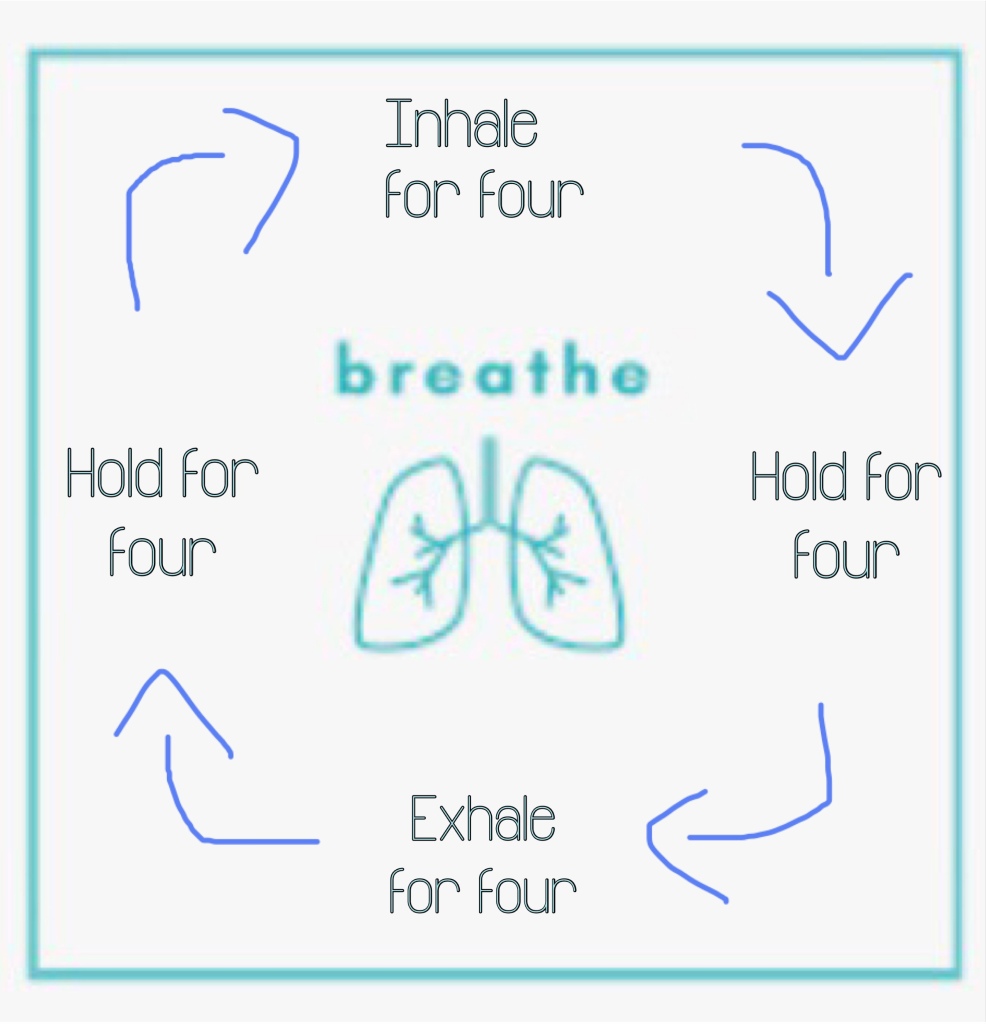
I’m late to the simple concept of squared breathing. In all the therapy, meditation, pain management sessions etc I have done it’s strange that I didn’t learn about before. I’ve tried umpteen breathing exercises. All touted as a wonder cure, none ever succeeded in doing anything but annoy me. Imagine my surprise when the simple act of breathing in for four, hold for four, out for four, hold for four and repeat actually worked. Squared breathing doesn’t reduce pain, it reduces the panic I feel when my pain starts climbing out of control. Holding off that panic is game changer. All the tension that comes with freaking out increases pain. The whirring fear severely impacts my ability to make clear decisions. In short, the panic makes a horrible situation worse. Carving myself a little bit of time to think with this exercise actually makes a big difference in those unbearable moments.

Diagram explaining squared breathing

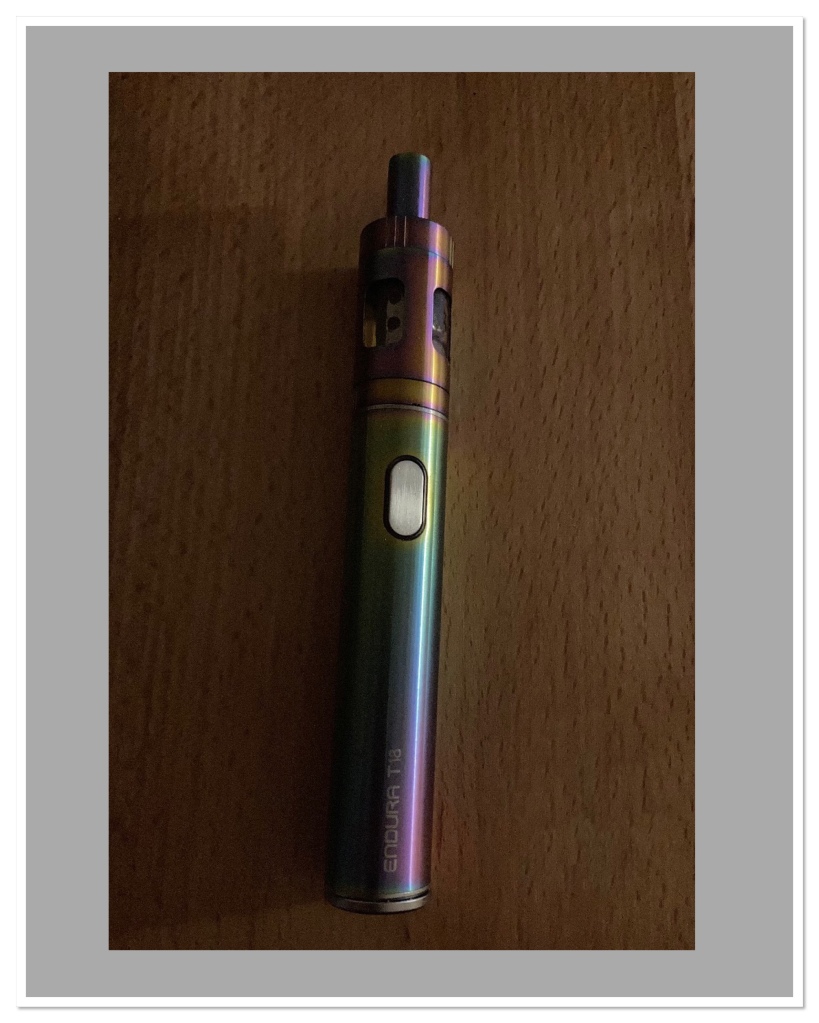
Finally, we have CBD. Not a new or unknown thing. This is another one I tried before, but only recently perfected. In the past I tried cbd gummies & oil. I didn’t have much success with either. I found the huge array of products overwhelming. I couldn’t quite work out what strength & how much I needed to find relief from my symptoms. The gummies had no impact. The oil was a little better, but the taste made me gag (& sometimes throw up). The after taste contaminated my mouth the whole day. Every site I looked at seemed to offer different advice. I became confused and gave up. A couple of months ago I tried some disposable CBD vapes. A very knowledgable member of staff in a local shop helped me. In no time at all I had finally worked out the right strength for me. I have now invested in a refillable vape & stocked up on oil. I’m using 10% organic vision cbd oil with a minty fresh flavour, which is very palatable. It’s helping with headaches, muscle pain & stiffness.

Multi coloured vape pen on wooden background

As always, I want to remind everyone that I am not a medical professional. I am only describing what has worked for me. Please consult your Dr before making changes.

If you enjoy my writing you can support me here or on Patreon