
Pain is a curious beast. Its purpose is to protect us. Our own built in warning system; something that compels us to take our hand out of the fire or call a doctor. The whole point of pain is to give us a message that we don’t ignore. That is until something goes wrong. Then ignoring pain becomes your life mission.

Chronic pain is impossible to accurately describe. If you haven’t experienced it, you can never understand. All our lives we’re taught to report pain. The expectation being that you find the problem and there will be a solution. You graze your knee, your mum puts germolene on & kisses it better. You break a bone, you get a cast & it heals. Now with vigilance we can even hope to survive life threatening illness. We are a society awash with information; what foods we should eat, how often & how to move our bodies, how much sleep, water, sunlight are optimal. Our collective consciousness is set to believe that if we do the right things we can prevent illness and if something still goes wrong we can fix it. When that doesn’t happen, you’re stuck in a void. Physically, you are ill, but psychologically you must find a way to override it.
I am awoken most mornings by pain. I average about 4hrs sleep and rising from my bed is a fainting hazard. Every step I take hurts. My digestive system is best described as erratic and my autonomic processes are haywire. Thus I spend my days dizzy, sore, nauseated, exhausted and unable to regulate my temperature. That combination would bring most people to a standstill. You’d call the Dr, take the day off and you’d be right. But it’s everyday for me and Drs can’t help. I can’t ‘call in sick’ from life. I’m left with the challenge of learning how to turn off my body’s alarm system.
Unfortunately, you can’t. It isn’t possible to stop the pain. Chronically ill people just have to do it anyway. The only alternative to missing my entire life is to do as much as I can despite the pain. It takes a lot of work to rewire one’s natural responses. Then even more work to decipher how far you can push. A huge amount of planning is involved. There are calculations required for every single thing I want to do. Firstly the practical:
I always try to schedule my days. I estimate in advance how much impact each activity will have on my body. Then aportion rest days accordingly. Not just big days, but daily essentials like housework or showering. I attempt to judge how much I can handle and how long a recovery period I will require.
The next step is planning. Before I go anywhere I check various things. Will there be places I can sit down, do they have disabled toilets, can I access water & food I can eat? Then I figure out my condition that particular day. Is my stomach behaving? Will it be safe to eat when I am out or am I likely to vomit. Am I especially dizzy? How safe is the location if I faint? Can I physically manage the walking distances involved? And so on and so forth.
The last stage of practicalities is symptom management. Medication selection, will I require more than meds for pain relief, do I need to take food or water. What clothes will keep me most comfortable? Items that won’t increase pain, will be cool enough if I overheat, but easy to carry layers to guard against the cold if necessary. Maybe I need cooling spray or my tens machine. How many of these things can I actually carry? All must be weighed up before I step foot out of the house.
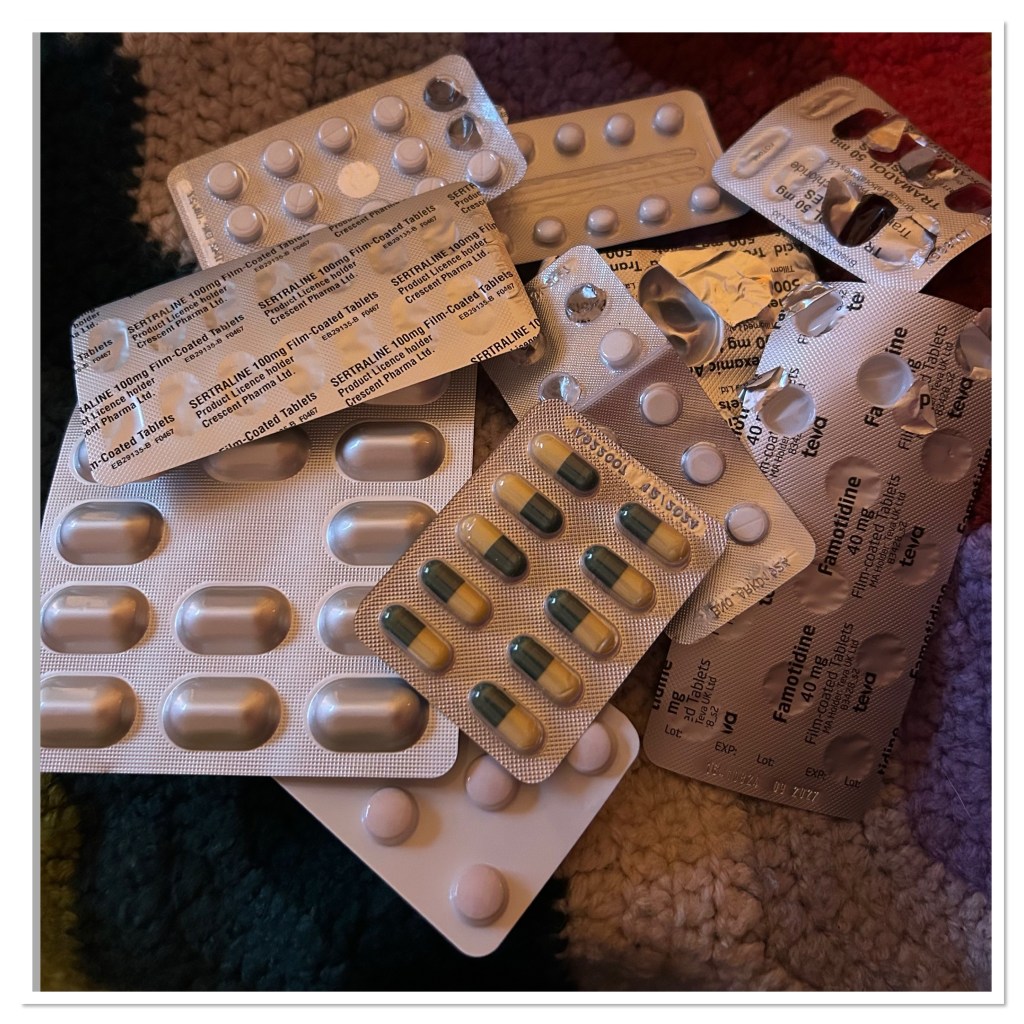
Preparations complete, now comes the really tricky bit. It’s time to manage my mind. This part is entirely in my hands. There are no guaranteed techniques. One can see pain specialists, psychologists and research til the cows come home, but you can only know what works via trial and error. One of my conditions, Fibromyalgia, impacts the way the central nervous system processes pain. Sometimes my nerves send pain signals to my brain that are way out of proportion. I can have pain anywhere or everywhere for no discernible reason. The only way to function is to override that pain. I can’t stop feeling it, but I can attempt to alter how I react to it.
My first line of defence is what I call ‘mind over matter’. I focus only on the very next thing to be done. Nothing else exists. For example, I must get to the seat up ahead. I don’t think about which parts of me hurt. No lingering on the sensations I am experiencing. I do not consider what comes after the seat. I keep my eyes on my target, keep moving and tell myself I can rest when the task is complete. This theory can be applied to anything. Brush my teeth, finish the paragraph, get to the end of the driveway. The reward of rest awaits me.
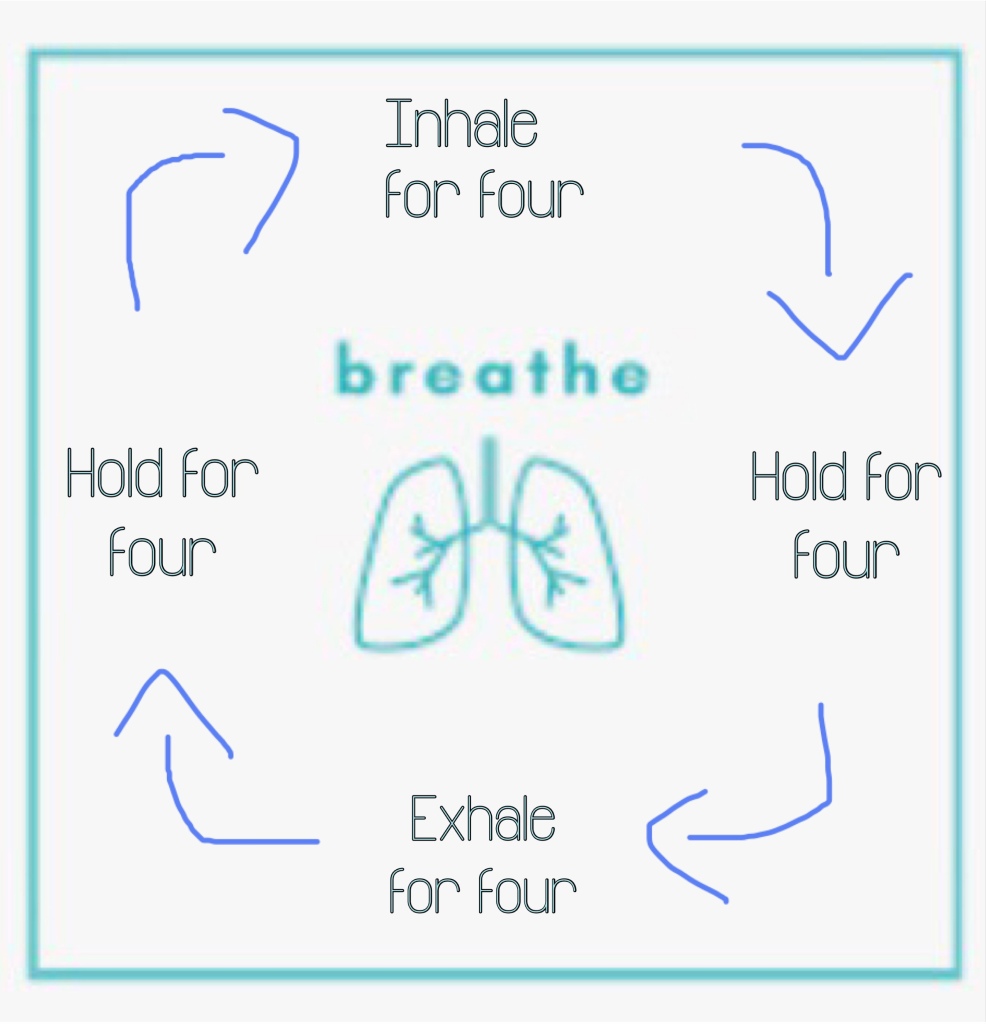
In bouts of extreme pain I opt for deception. When I have tried every pain relief method at my disposal to no avail, I lie to myself. I close my eyes and repeat ‘I’m ok’. It doesn’t lessen the pain, but it can con my body out of panic. Panic makes pain worse. The body tenses & heart races. Calmly telling myself that I am ok repeatedly can override the fear coursing through my body. The pain may be unbearable, but I won’t stop the repetition. I will bear it.
Distraction can be of use in various forms. Really loud music is a rudimentary diversion. As is cold water/ice or projected light. Basically I bombard my brain with stimuli in the hope of distracting from the pain. It’s a trick, sometimes it offers temporary relief. My other interruption tactic requires the help of others. I need someone to talk to me. A steady stream of words without my participation. Don’t ask me questions or wait for a response, simply give me a voice & a narrative to focus on. I’m not sure why but it has a calming effect. I don’t take in everything that is being said. I merely zone in on the voice and try not to think about anything else. It doesn’t stop the pain, but it somehow helps me manage it.
My last ditch effort is comparison. I recall a time when my pain was worse. I remind myself that I got through that. The pain did eventually end. If it passed before, it will pass now. I endeavour to remember all the details. Where I was, what I wore, the smells, sounds, what my eyes rested on, the sensations of needles piercing my skin, the names of medical professionals, were they kind or rude, how long I waited, did I lie down and every other particular. Eventually, reaching the point when the agony began to subside. I strive with all my might to recollect that sensation; the incredible relief of pain beginning to melt. I hold tight to the belief that it will come again.
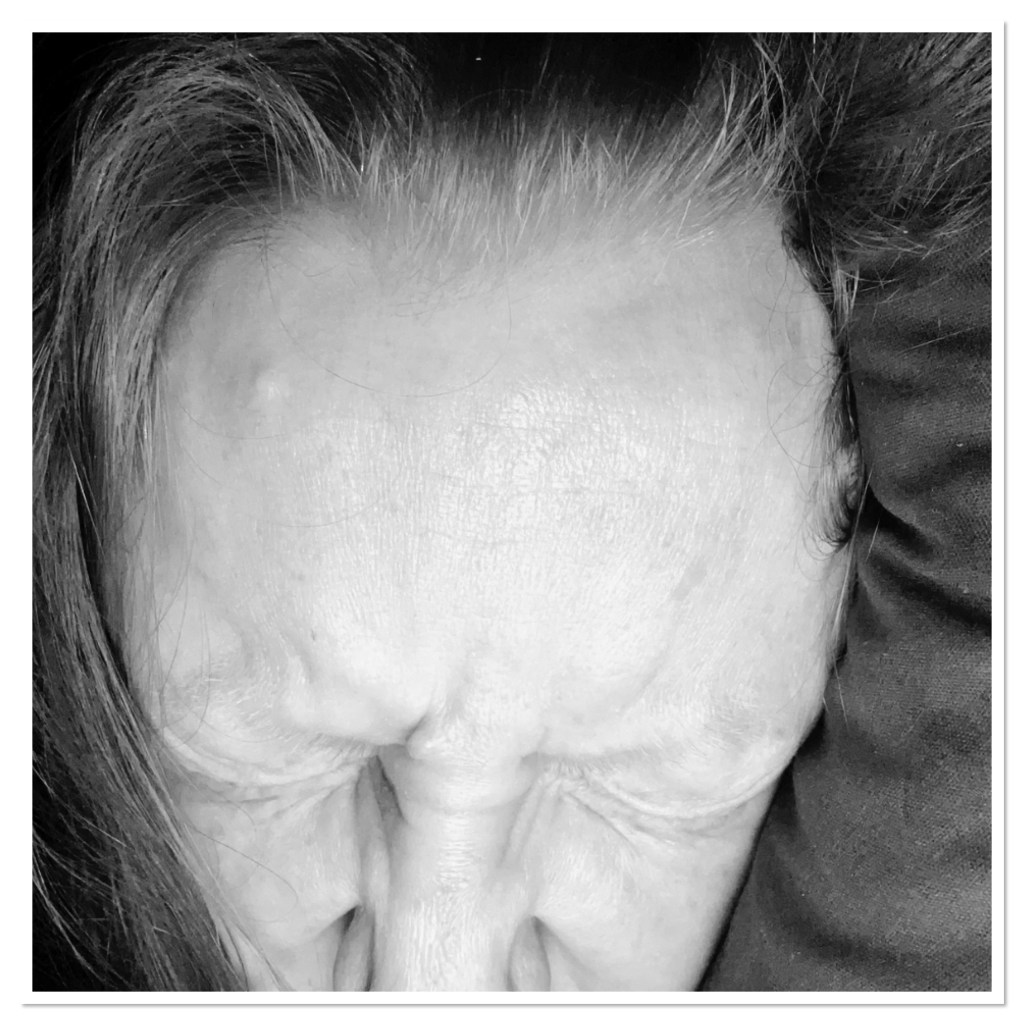
And there you have it, the tools in my box. Of course none of them actually leave me pain free and they’re all exhausting. It takes enormous energy to pre-empt every move and even more to employ these strategies whilst already in pain. At the worst moments they don’t have any impact at all. There are times when my body is excruciating. The pain so all encompassing that there is no escape. On those days I am beaten. I stay still and hope for it to be over. That’s the real truth of chronic pain; there’s no getting away from it.
If you like what I do you can support me on Patreon.
 Something in the way she moves...
You must be logged in to post a comment.