This month I’d like to talk about conflicts in parts of the world that are often ignored. People are dying, being exploited and suffering whilst most of the world does nothing.
The conflict in Sudan broke out in April 2023. A power struggle between government forces & RSF has resulted in a humanitarian crisis. More than 7 million people have been internally displaced with a further 1.9 million seeking refuge in neighbouring countries. The human cost is enormous; gender based violence, food & water shortages, disease outbreaks pose immediate threat. Economic insecurity, health & education infrastructure attacks compound the crisis. You can help.
UNHCR work tirelessly to provide aid to refugees. They establish transit centres for rest, access to essential protection services and emergency supplies. They also assist displaced people inside Sudan with non food items and shelter. Please donate if you can.
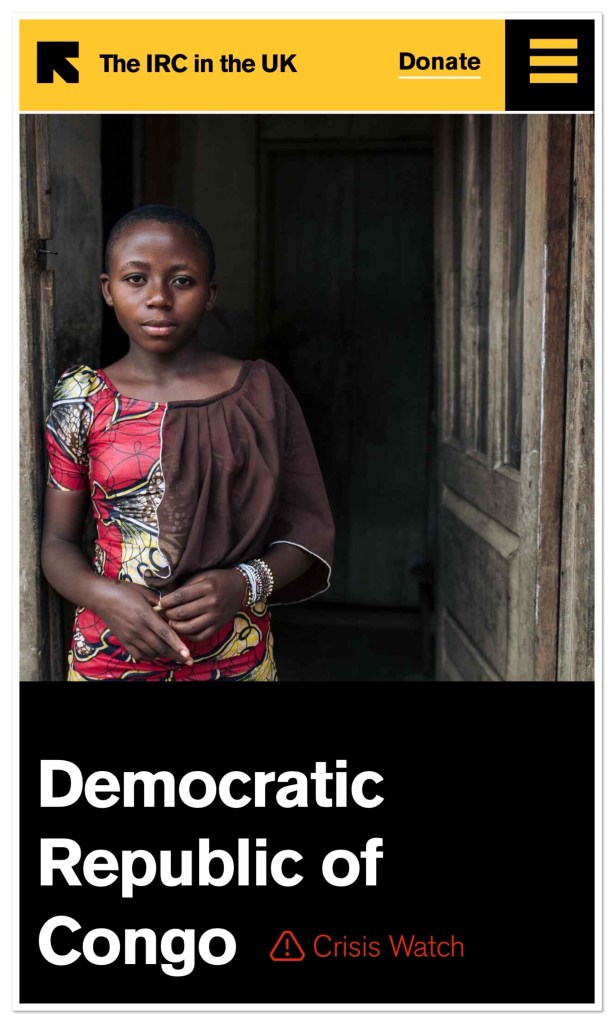
A resurgence of fighting in DR Congo has worsened the humanitarian crisis. Forced displacement began almost 20 yrs ago, 7.9 million Congolese people are currently displaced. Many of them are in urgent need. In conflict areas women and children face widespread sexual violence. Kidnappings, extortion and forced labour are common place along with food, water & medical shortages. The scale of the crisis is terrifying. Please do what you can.
The IRC work to provide a number of services in DR Congo. Emergency medical care, shelter, training government workers, counselling for survivors of sexual violence and more. Please give what you can.
Today marks a year since the beginning of the conflict in Sudan. A conflict that has been largely ignored my most of the world. To date 16000 people have been killed and over 8million have been forced to flee their homes.
Millions are currently living with acute food insecurity and without the basic necessities of life. Sexual and other violence are widespread in conflict zones & asylum routes. We can help by not being silent about the crisis in Sudan and if possible by supporting one of the following organisations.
The UN Refugee Agency provides protection and critical life saving services in Sudan. This includes shelter, food, water, health & sanitation facilities, cash based interventions and resettlement resources.
UNICEF provide emergency aid along with child targeted services such as education, immunisation and support for unaccompanied children.
If you are unable to make a donation at this time you can still help. AWOON, a women’s activist organistation providing legal assistance & advice for women in Port Sudan. Their work is especially targeted at people who have experienced sexual & gender based violence. They are currently hampered by interference from government agencies. World Organisation Against Torture (OMCT) is asking us to write to authorities in Sudan demanding that AWOON be allowed to operate freely and have their assets unfrozen. You can addressed and more information on the OMCT website.
We’re all familiar with the reminder letters and campaigns urging us not to miss our cervical smear test. We are rightly told how important they are in detecting cancers early. I’m glad these tests are available. I am also happy that we are educated on why these tests are so necessary. However, I find myself increasingly frustrated with the messaging.
So often when a person or organisation wants to encourage people to attend cervical screenings they focus on how easy it is. We’re told it is silly to be embarrassed and it will be over in a flash. Don’t risk your life over 5 mins of feeling awkward is repeated. Smear tests are confidently declared to be not painful. Just a little discomfort, nothing to worry about. While that might be true for lots, it is not full the picture. The patronising assumption that people miss smear tests because they’re self-conscious is harmful. Many people have valid reasons for their reticence. Addressing those issues would be a more effective way of increasing uptake numbers.
Research from Jo’s Cervical Cancer Trust and Rape crisis revealed that 72% of women who have experienced sexual violence have skipped or delayed a smear test. When you consider that at least 1 in 5 women have been sexually assaulted you can begin to understand the scale of the issue.
Birth trauma & pregnancy loss also impact a significant portion of those who require smear tests. Gynae exams & cervical screening require being in vulnerable positions that can trigger a trauma response. Recent research is finding that baby loss & birth trauma often results in PTSD. So, it’s easy to see why a smear test would be not a easy exam for those who are affected.
There are also medical conditions/physicalitys that can make a smear test very difficult. Conditions like ,vaginisimus, endometriosis, cervical ectropion and more can make smear tests painful or difficult. Cervical position, vaginal dryness, menopausal changes and FGM can also impact how a smear test feels.
Trans men may find smear tests hard for all obvious reason. Dysphoria, stigma, discrimination and more. I’m sure everyone can understand how having to deal with any or all of those things is a frightening prospect. It can also be difficult to access information; trans men may not be invited for cervical screening, there is confusion about who requires the test etc. Of course this may be combined with any of the other issues on this list.
This is by no means an exhaustive list. I just want to be clear that there are many real reason for a person to avoid cervical screening. That being said, how can we make it easier? Well, there are actually a lot of accommodations you can ask for. I don’t see this talked about enough, so I wanted to share that information.
Before I get into the details, I want to be clear that you do not have to disclose anything you are not ready to discuss. You can ask for accommodations without revealing your trauma.
Before the Test
You can ask you GP to take your name off the automatic reminder list if those letters are distressing.
Ask for the test to be performed by a person of your preferred gender.
If you have an established relationship with a Dr/Nurse you can ask to have them do your smear test.
Make an appointment to talk about the smear test. Discuss anything you need to talk about. Be that how the test is done, why is it done, your fears, worries etc.
Request a double appointment to allow time breaks, extra time.
Plan what you will do after the test. You may not feel up to returning to work or you might not want to be alone.
The Test
Take an emotional support person to the appointment.
Request a chaperone be present for the test.
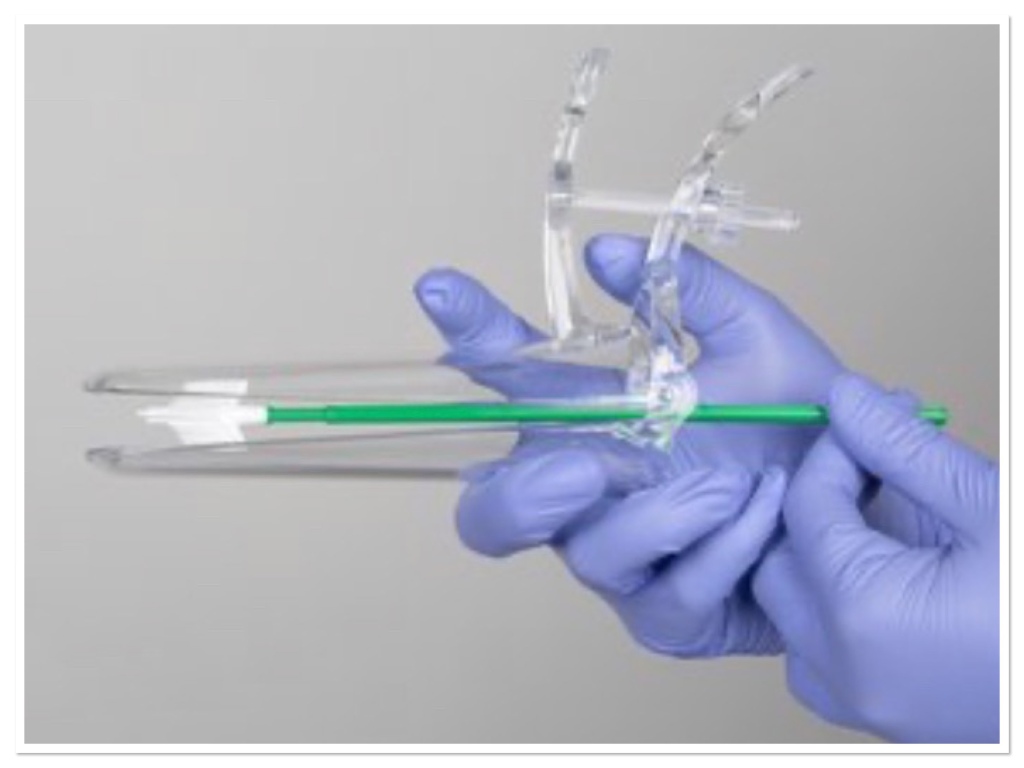
Ask to talk through the ‘mechanics’ of the test before you start. Have the Dr/Nurse show you the instruments used.
Tell the person performing the test any words or phrases that could be triggering for you. If there are words of comfort that are helpful for you ask them to use those.
Explain how heavy/light a touch you are comfortable. If there are areas you would like them to avoid touching if possible, tell the Dr/Nurse.
Ask to insert the speculum yourself.
If you are concerned about specific trauma/pain response discuss that with the Dr/Nurse. For example tell them this part of the exam is usually painful for me or I might be unable to chat/answer questions.
Agree a plan of action beforehand; what would you like to happen if you are triggered/pain is too much. You can decide on a word or sign to use if you are in distress.
Combatting Pain/Distress
Mindfulness Techniques – Exercises like naming three things you can see, smell, hear can help route you in the now.
Distraction – Play music, make small talk with Dr/Nurse, your support person.
Squared Breathing – This sometimes helps me get through acute pain/the onset of panic. Breath in for 4, hold for 4, breath out for 4, hold for 4. Repeat.
Take a comforting object. Fidget object. Scent that invokes calming feeling. Hold support person’s hand.
Discuss having medication prescribed. Things like benzodiazepines can help with anxiety, allow your body to be less tense. Maybe you need a stronger pain medication to deal with the test/after effects.
Know Your Limits
It is ok to stop at any point. If any part of the process becomes too much, stop. You can reschedule the appointment. It is ok to try as many times as you need. This test is for you. You are not obligated to fit into anyone else’s timeline or expectations.
Smear test are an important part of early cancer detection, but your whole health & well being are equally important. Shaming people or dismissing the reason for their reluctance does not help. If we are to increase the uptake rates we need to acknowledge what is actually preventing people from attending. We also need to facilitate ways to address those concerns.



 Something in the way she moves...
You must be logged in to post a comment.